Cherries
Chilean cherries reach the northern hemisphere counter-season, and that window is short. Harvest, sorting, packing and cold chain are all organised around it, so the fruit leaves the orchard and arrives at destination in the condition it was picked in.
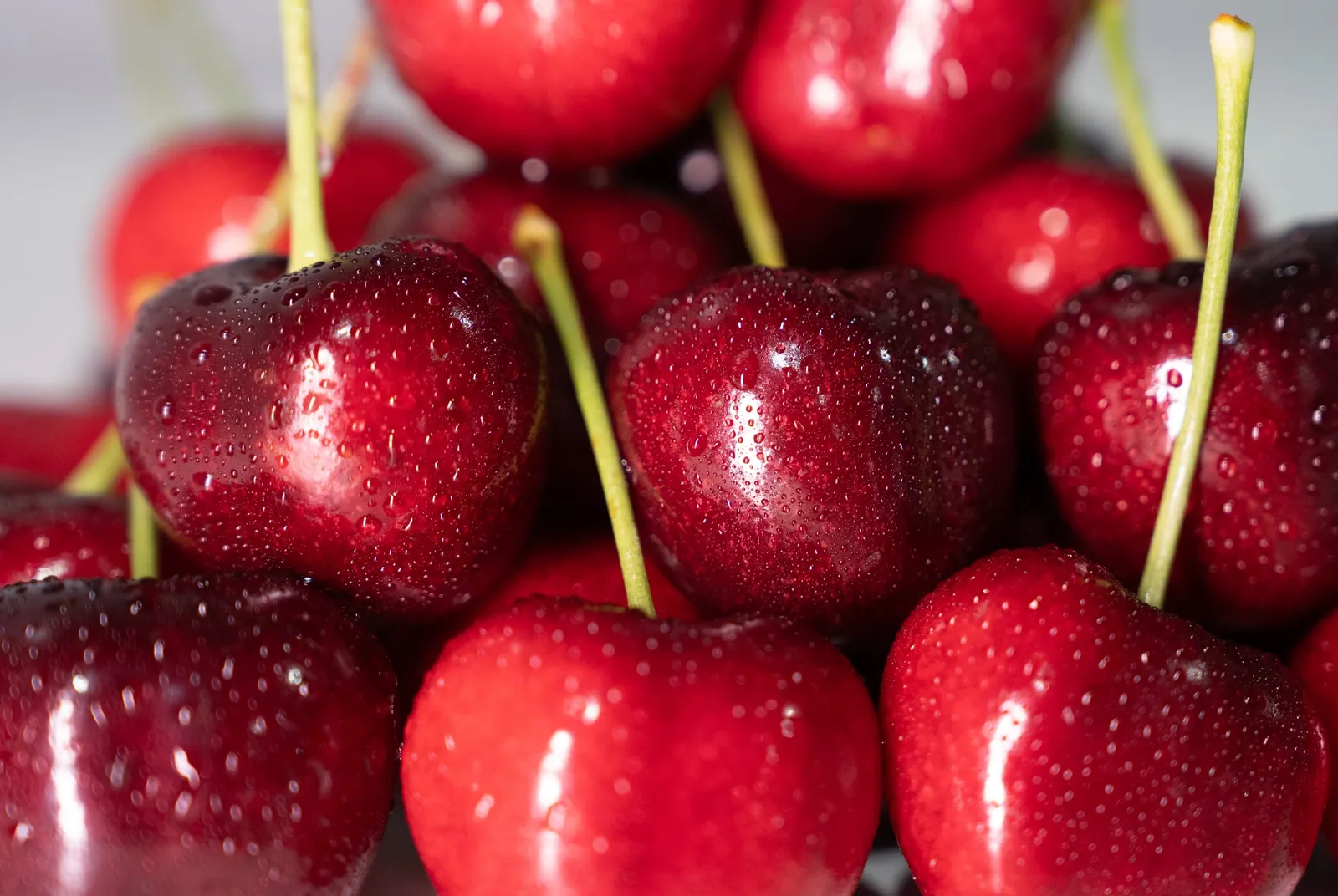
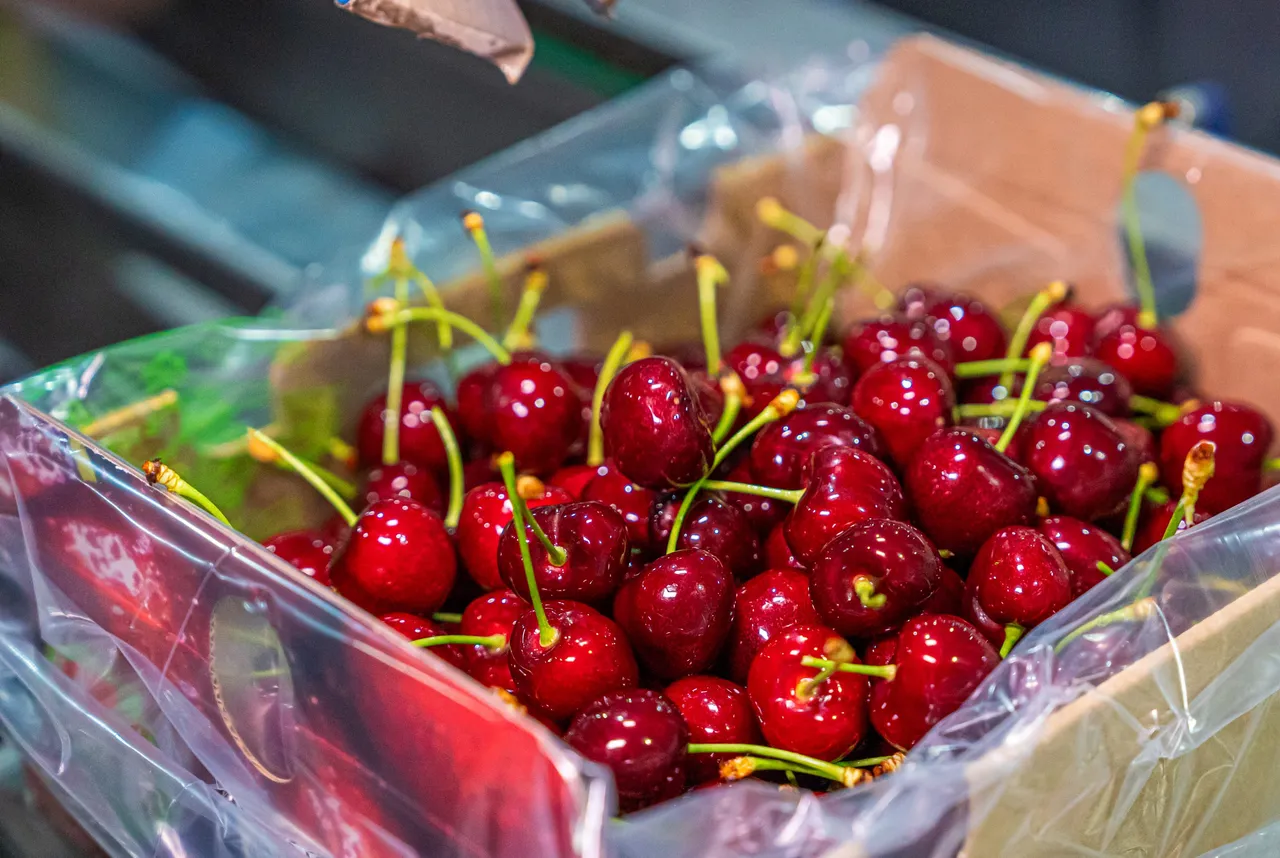
Cherries do not forgive handling mistakes. Box strength and ventilation matter, because cherries have to be held at low temperature and high relative humidity: the packaging is not just presentation, it is part of the cold chain.
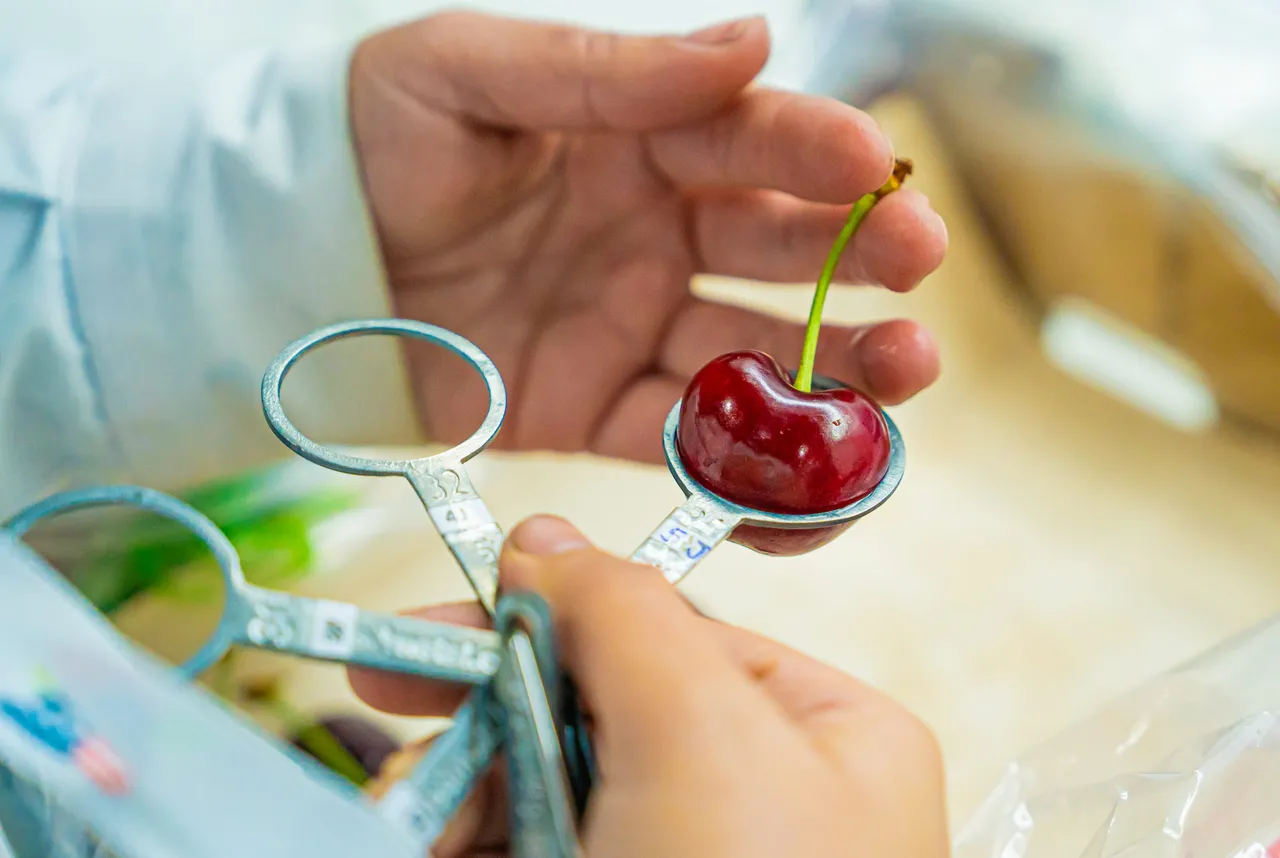
At the packing house we use optical sorting with AI, plus calibre and firmness checked fruit by fruit, so that every box leaving under our label holds a homogeneous product of the same type, size and quality, one that the distributor and the end consumer can recognise.
Much of that care exists because a cherry is not only eaten, it is given. In the Asian markets a box of cherries is a gift: red is the colour of luck and celebration, the fruit arrives whole and unblemished, and it lands in the middle of the northern winter, when little else fresh does. A gift is judged the moment the box is opened, which is why homogeneity inside the box is not a refinement, it is the point.
Varieties
We grow these varieties, in the order we harvest them:
- Royal Dawn
- Santina
- Lapins
- Bing
- Rainier
- Kordia
- Skeena
- Sweet Heart
- Regina
Those varieties, combined with the geographic location of the orchards they are planted in, let us produce from week 45 through week 52.
Packing formats
- 2.5 kg box
- Straight to the pallet, as a lid-and-base box. The small format concentrates demand across the Asian markets, where a box of cherries is a well-regarded gift.
- Master 5 kg 2x1
- Two units per master carton, for customers consolidating volume without giving up the retail format.